

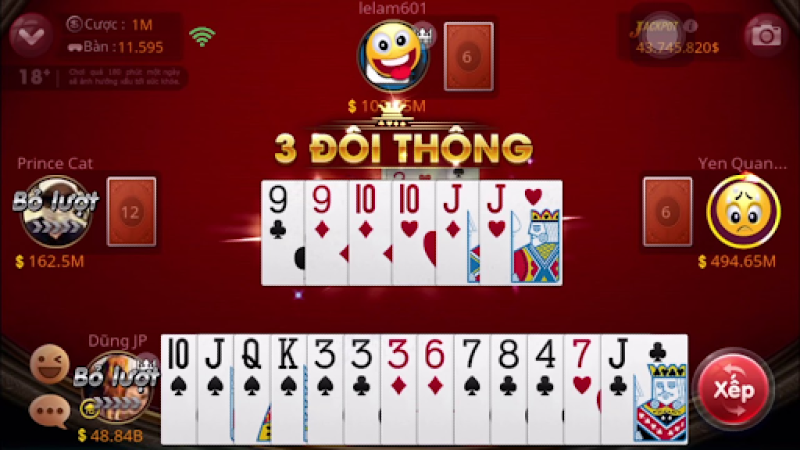
Exploring Tiến Lên in game bài is a suitable choice for players who enjoy a fast-paced game using a standard 52-card deck with relatively accessible rules. Each player usually receives 13 cards and takes turns playing them with the goal of getting rid of the entire hand before the opponents. The appeal lies in combining cards into pairs, Three of a Kind, Straights, Four of a Kind, or saving stronger cards for the right moment. Although the basic rules are not overly complicated, players still need to observe which cards have already appeared, control the turn, and organize their hand from the beginning.
Tiến Lên Rules and How to Use 13 Cards in Each Round

Tiến Lên uses a familiar Western card deck, but the value of each card and the blocking rules should be understood clearly before playing. A round usually begins after every player receives 13 cards. Participants take turns playing a single card or a valid combination, while the next player must use the same type of combination with a higher value if they want to take control. The first person to play all cards achieves the main objective of the round.
Single Cards
A single card is the simplest play, with the player placing one card on the table. To beat it, the opponent must use a valid higher-value card according to the rules of the version being played. Lower cards should often be removed early when the opportunity appears, because holding too many disconnected cards near the end makes it harder to finish the hand. However, players should not immediately use all their strongest cards if they have not yet considered how they will regain control later.
Pairs
A Pair consists of two cards with the same rank, such as a pair of 7s or Queens. When exploring Tiến Lên in card games, beginners should separate pairs immediately after receiving all 13 cards to understand the structure of the hand more clearly. A Pair can be kept intact or split into two singles depending on the situation. If several consecutive pairs appear, players should also check whether they can form special combinations under the rules of that particular table.
Straights
A Straight consists of at least three consecutive cards according to the rules of the version being played. This is a useful combination because it allows several cards to leave the hand in one turn. After receiving the cards, players should check sequences such as 4-5-6 or 8-9-10-J to avoid accidentally breaking a Straight when playing singles. However, keeping a Straight for too long can also become a disadvantage if an opponent is close to finishing and the player no longer gets a chance to lead with that combination.
Four of a Kind
Four of a Kind consists of four cards with the same rank, such as four 9s. This combination may have special functions depending on the Tiến Lên variation and is often saved for important situations. Before using it, players should read the specific table rules because blocking conditions and special applications may differ. Four of a Kind should not be broken into individual cards if the rest of the hand still offers other ways to deal with weaker cards.
Important Situations to Observe Carefully When Playing Tiến Lên
A Tiến Lên round does not depend only on holding many high-value cards. Using them at the right time has a much greater effect on the flow of the game. Players should track how many cards each opponent has left, remember which strong cards have already appeared, and think carefully before passing. When one player has only a few cards remaining, the approach should also change to reduce the chance of that opponent finishing quickly.
Taking Control of the Turn
Having the right to lead allows players to choose a single card, Pair, or Straight that suits the structure of their hand. This can be a significant advantage when holding combinations that are difficult to play while responding to an opponent. For that reason, a strong card may sometimes be worth saving to regain control rather than using it early. Once the turn is secured, players can prioritize removing multi-card combinations or weak cards that are difficult to manage.
Passing
Being able to beat an opponent does not mean it is always the right decision. If doing so requires breaking a strong Pair, splitting a Straight, or using an important card just to win an unimportant turn, the hand may become much harder to manage later. In Tiến Lên card games, knowing when to pass is also part of the strategy. Players should consider how many cards each opponent has left, the chance of regaining control later, and the combinations still available before making a decision.
When an Opponent Has Few Cards Left
When an opponent has only one or two cards remaining, the priority is no longer simply getting rid of your own cards. Players need to avoid creating an easy opportunity for that opponent to play the final card. If an opponent has only one card left, leading with a low single can be risky if no player behind is likely to beat it. Tracking the number of cards held by each opponent is therefore especially important in the final stage, when one careless turn can determine the entire round.
Strong Cards Already Played
Remembering all 52 cards is difficult and unnecessary for beginners. Instead, players can focus on the strongest cards and notable combinations that have already been played. If many high-value cards have left the table, a medium-strength card in hand may become more useful near the end. Card memory improves gradually with experience, so it is better to start by tracking a smaller group rather than trying to remember everything immediately.
Tips for Playing Tiến Lên and Managing Your Hand More Effectively
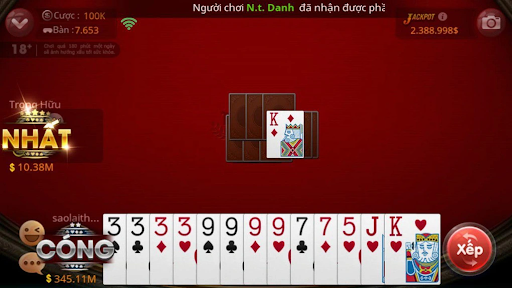
The initial arrangement of the hand has a major influence on later decisions. Players should classify singles, Pairs, Three of a Kind, Straights, and special combinations before the first turn begins. They should then identify cards that may be difficult to play and look for opportunities to remove them. The strategy should change according to the situation instead of following one fixed plan from beginning to end regardless of how many cards opponents have left.
Arrange All 13 Cards Immediately After They Are Dealt
The first step is to identify natural combinations in the hand. Players should look for long Straights, Pairs, Three of a Kind, and Four of a Kind before deciding which cards are truly isolated. This approach helps prevent accidentally breaking a valuable combination simply to play one weak card. If a card can belong to both a Straight and a Pair, try both arrangements to determine which one makes the overall 13-card hand easier to manage before deciding.
Prioritize Difficult Isolated Cards
Cards that do not belong to a Pair, Straight, or Three of a Kind may become a burden as the round approaches its final stage. Players should use opportunities when they control the turn to remove these cards, especially low-value singles. However, there is no need to play every single card at any cost. A strong single can still serve as an important tool for regaining control. The goal is to reduce difficult cards while preserving enough options to remain proactive.
Do Not Break Strong Combinations for a Minor Turn
When an opponent plays a Pair or single card, a player may sometimes be able to beat it only by breaking an existing combination. This decision should be considered carefully. Splitting a long Straight to use one card may turn several remaining cards into isolated pieces. Similarly, breaking a strong Pair too early can reduce options in later rounds. The benefit of taking control should always be weighed against the damage done to the structure of the hand.
Observe the Rhythm of the Game
Players who focus entirely on their own 13 cards can easily miss important signals from opponents. The number of cards remaining, the types of combinations they frequently pass on, and the strong cards they have already used all provide useful information. When exploring game danh bai Tiến Lên in card games, building this habit of observation helps players make more informed decisions, especially near the end when everyone has significantly fewer cards left.
Conclusion
Exploring Tiến Lên in card games should begin with understanding the 13-card rules, how to use singles, Pairs, Straights, and special combinations such as Four of a Kind. In addition to the cards dealt, hand arrangement, maintaining control of the turn, and observing opponents’ remaining cards all influence how the round develops. Understanding the structure of the hand before playing and adjusting flexibly to match developments can help players approach Tiến Lên more proactively.