

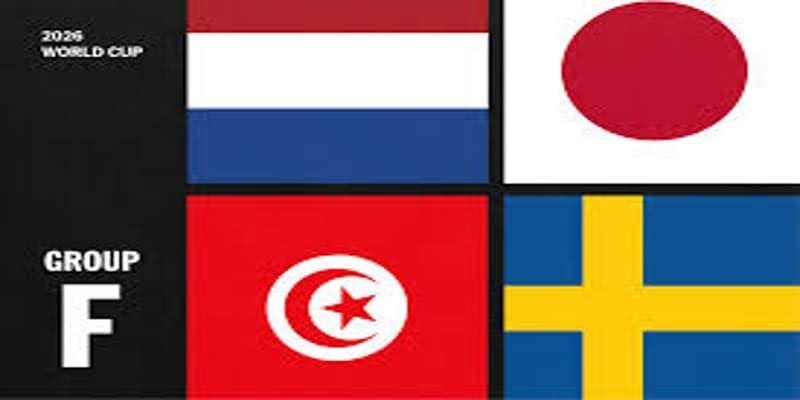
The Group F odds at the 2026 World Cup have become one of the most analyzed topics among football analysts and global betting markets ahead of the tournament at tỷ lệ bóng đá world cup. This group is often described as a “hidden group of death” because three of its four teams-Netherlands national football team, Japan national football team, and Sweden national football team-are ranked among the world’s top 38 teams. The remaining side, Tunisia national football team, is a traditionally resilient representative from African football.
Overview of Group F at the 2026 World Cup
Group F matches will take place between June 14 and June 25, 2026 across four major stadiums in North America:
Matches in Group F will take place across four stadiums in North America: AT&T Stadium in Arlington, Texas, NRG Stadium in Houston, Estadio BBVA in Monterrey, Mexico, and Arrowhead Stadium in Kansas City. These venues are among the major stadiums selected to host games during the tournament.
From the moment the draw was completed for the FIFA World Cup 2026, analysts quickly labeled Group F as one of the most tactically intriguing groups in the tournament. According to probability models used by international betting markets, the projected qualification chances are roughly as follows:
These numbers highlight the tight race among the top three teams. While the Netherlands are still considered the strongest contender, Japan is not far behind in most betting projections.

Four contrasting tactical philosophies
Another reason the Group F odds at the 2026 World Cup remain difficult to predict is the contrast in playing styles among the teams.
-
The Netherlands emphasize structured possession football.
-
Japan relies on high-intensity pressing and quick transitions.
-
Sweden favors physical play and direct attacks.
-
Tunisia operates through a disciplined defensive organization.
Because of these differences, each match in Group F is expected to present a unique tactical battle.
Netherlands: the leading contender in Group F
The Netherlands national football team entered the tournament as the favorite to top the group. Under head coach Ronald Koeman, the Dutch side continues to rely on the classic 4-3-3 formation. The squad’s key players include:
-
Virgil van Dijk – the team’s captain and defensive leader
-
Frenkie de Jong – midfield playmaker
-
Cody Gakpo – attacking threat on the wing
The Netherlands possess significant tournament experience, but their biggest concern remains the lack of a consistently prolific striker.
Strengths
-
Stable tactical structure developed over several years
-
High-quality midfield capable of controlling possession
-
Experienced defensive line
Weaknesses
-
Lack of a world-class goal-scoring striker
-
Pressure from the long pursuit of a first World Cup title
Japan: a serious contender for qualification
The Japan national football team arrived at the tournament in excellent form. Coach Hajime Moriyasu has built a flexible system using a 3-4-2-1 formation.
Important players include:
-
Wataru Endo – midfield leader
-
Takefusa Kubo – a dynamic playmaker with exceptional creativity and vision.
-
Kaoru Mitoma – pace and dribbling on the wing
Japan previously shocked the football world at the FIFA World Cup 2022 by finishing first in a group containing Germany and Spain. That performance has forced bookmakers to adjust the Group F odds at the 2026 World Cup, giving the Samurai Blue greater respect.
Strengths
-
Fast pressing system
-
A squad featuring many players with experience in top European leagues.
-
Excellent transition play
Weaknesses
-
Lack of a top-level central striker
-
Pressure to replicate previous World Cup success
Sweden: a dangerous dark horse
The Sweden national football team qualified for the tournament through the playoff path. Head coach Graham Potter has built the attack around two key forwards:
-
Alexander Isak
-
Viktor Gyokeres
Both players are prolific scorers and form one of the most dangerous striker partnerships in the group. Defensively, captain Victor Lindelof provides leadership and stability.
Strengths
-
Strong attacking duo
-
Physical style suited to tournament football
-
A direct and efficient attacking style focused on quick transitions and decisive finishing.
Weaknesses
-
Defensive depth concerns
-
Limited preparation time under a relatively new coach

Tunisia: the defensive specialists
The Tunisia national football team may not be favorites, but they remain a difficult opponent. The team often deploys a compact 4-3-3 system focused on defensive solidity.
Key players include
-
Ellyes Skhiri – a disciplined defensive midfielder with strong ball-winning skills.
-
Hannibal Mejbri – an energetic creative midfielder with flair and attacking vision.
Tunisia’s disciplined defensive structure has historically frustrated stronger teams in international tournaments.
Strengths
-
Highly organized defensive structure
-
Strong tactical discipline and teamwork
Weaknesses
-
Limited attacking firepower
-
Lack of deep World Cup experience
The decisive match of Group F
The most anticipated game in the group will be the clash between the Netherlands national football team and the Japan national football team at AT&T Stadium on June 14. This opening match could shape the entire group standings. If Japan manages to defeat the Netherlands, they would immediately become favorites to top the group.
Another crucial encounter will see the Netherlands face Sweden. That match could feature an intense battle between Virgil van Dijk and Sweden’s attacking duo Alexander Isak and Viktor Gyokeres.
Three possible scenarios for Group F
Based on the current Group F odds at the 2026 World Cup, analysts consider three main scenarios.
Scenario 1 – most likely (35%)
-
Netherlands finish first
-
Japan finish second
-
Sweden place third
Scenario 2 – moderate upset (25%)
-
Japan win the group
-
Netherlands finish second
-
Sweden compete for a best third-place spot
Scenario 3 – major surprise (15%)
In this scenario, the Sweden national football team finishes in the top two and eliminates either the Netherlands national football team or the Japan national football team. The striking duo of Alexander Isak and Viktor Gyokeres could make the difference with decisive goals. A positive result against Japan or a draw with the Netherlands would quickly change the group standings. Tactical flexibility from coach Graham Potter could also help Sweden challenge the favorites.
Conclusion
The tỷ lệ kèo bảng f world cup 2026 highlight how competitive this group is compared with many others in the tournament. The Netherlands remain the primary favorite due to experience and squad depth. However, Japan’s recent performances suggest they could challenge for the top spot. Sweden represents a dangerous wildcard thanks to their attacking partnership, while Tunisia may disrupt the standings with their defensive discipline. With four contrasting football philosophies and several high-level players, Group F is expected to deliver some of the most exciting matches of the group stage at the FIFA World Cup 2026.