

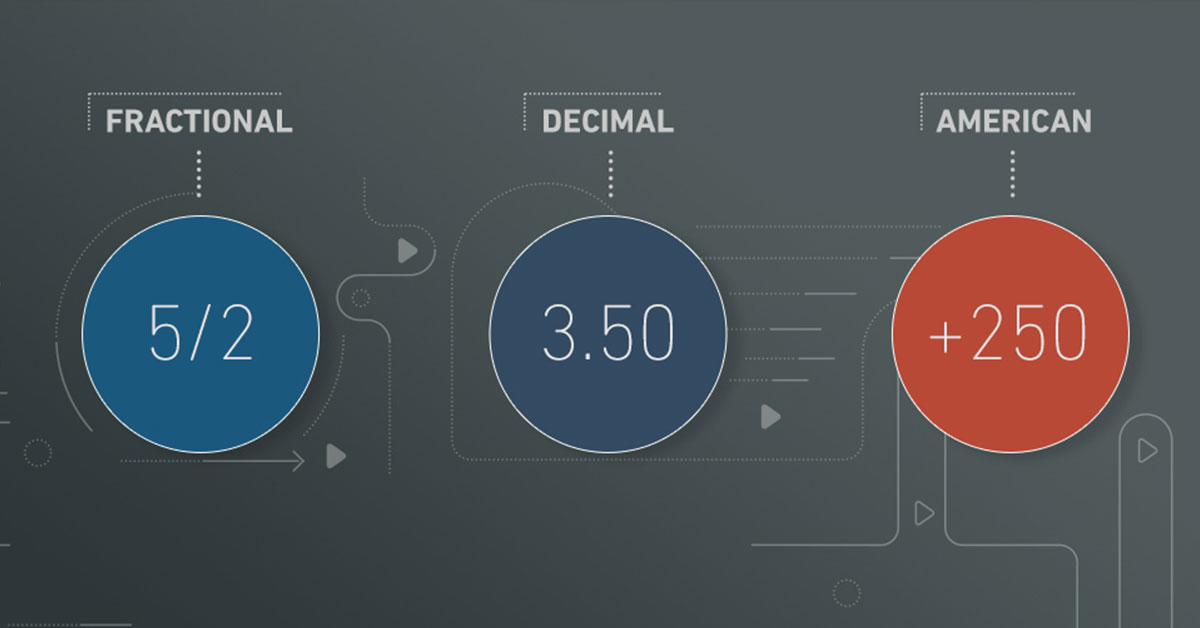
In the global landscape of sports wagering, decimal odds have emerged as the industry standard due to their undeniable mathematical simplicity and immediate transparency. Unlike convoluted fractional or American formats, decimal pricing allows punters to instantly calculate their total potential return by performing a single, effortless multiplication. Whether you are building complex arbitrage models or simply executing weekend accumulators at BK8 mastering decimal odds is the foundational step toward achieving long-term profitability.
The fundamental mechanics of decimal odds
To understand how decimal betting odds work, you must first understand what the number actually represents. In the decimal format (standard across Europe, Australia, and Asia), the odds figure represents the total amount you will receive back for every $1.00 you wager, should your bet be successful.
Crucially, decimal odds always include your original stake in the final calculation. This is a significant departure from fractional odds (like 2/1), which only display the potential profit. Because the stake is already baked into the decimal number, calculating your total payout is as simple as multiplying your stake by the odds provided.
Let us look at a practical example. Imagine you are betting on a tennis match, and Player A is listed at odds of 2.50. If you place a $100 wager on Player A and they win, the math is straightforward: $100 (Stake) x 2.50 (Decimal Odds) = $250 (Total Payout).
This $250 total payout consists of your original $100 stake being returned to you, plus $150 in pure profit. It is immediate, transparent, and leaves no room for mathematical confusion.
The critical threshold: Even money (2.00)
When analyzing decimal odds, the number 2.00 serves as the absolute baseline for risk assessment. Decimal odds of exactly 2.00 represent an “Even Money” (EVS) bet. This means your potential profit is exactly equal to the amount you are risking – a 1-to-1 payout ratio. If you bet $100 at odds of 2.00, your total return is $200 ($100 stake + $100 profit).
Understanding this threshold allows you to quickly categorize the market:
- Odds below 2.00 (e.g., 1.50): This signifies that the team or athlete is the favorite. Because they are expected to win, your potential profit will be less than your initial stake. For example, a $100 bet at 1.50 returns $150 ($50 profit).
- Odds above 2.00 (e.g., 3.40): This signifies that the team or athlete is the underdog. Because the outcome is less likely, your potential profit will be greater than your initial stake. A $100 bet at 3.40 returns $340 ($240 profit).
The real power of decimal odds: Implied probability
While calculating payouts is helpful for bankroll management, the true power of understanding how decimal betting odds work lies in converting those odds into “implied probability.” Professional sports bettors do not bet on who they think will win; they bet on statistical probability.
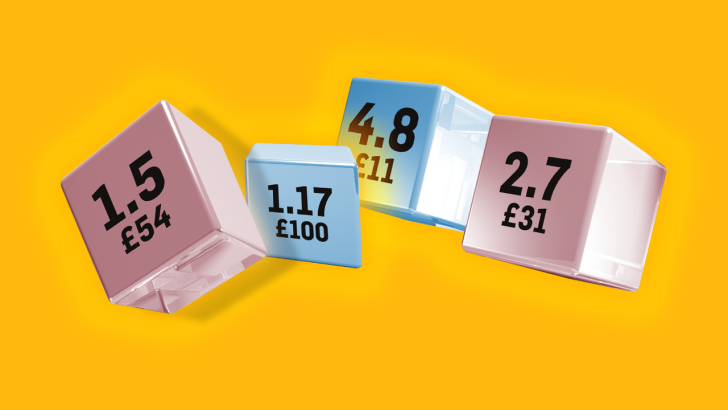
Every set of odds offered by a bookmaker directly corresponds to the percentage chance they believe that event has of occurring. Decimal odds make this conversion incredibly easy to execute. The formula is simply: (1 / Decimal Odds) * 100 = Implied Probability.
Let us apply this formula to real-world scenarios:
- Heavy Favorite (1.25 odds): (1 / 1.25) * 100 = 80%. The bookmaker implies an 80% chance of victory.
- Slight Underdog (2.80 odds): (1 / 2.80) * 100 = 35.7%. The bookmaker implies a 35.7% chance of victory.
Why is this calculation so important? Because it is the only way to identify Positive Expected Value (+EV). If a bookmaker like BK8 offers odds of 2.80 (implied probability of 35.7%) on a football team, but your advanced statistical model calculates that the team actually has a 45% chance of winning, you have found a massive mathematical edge. You place the bet because the odds are mispriced in your favor, guaranteeing long-term profit despite short-term variance.
Calculating the bookmaker’s margin
Bookmakers are not charities; they operate to make a guaranteed profit regardless of the outcome of a sporting event. They achieve this by building a hidden fee into the odds, known as the “margin,” “vig,” or “overround.” Decimal odds allow you to easily calculate this hidden margin.
To find the margin, you must calculate the implied probability of every possible outcome in an event and add those percentages together. In a fair, commission-free market, the total implied probability would equal exactly 100%. However, in reality, it always exceeds 100%.
Imagine a standard football Match Odds (1X2) market:
- Home Win: 2.10 (Implied Probability: 47.6%)
- Draw: 3.40 (Implied Probability: 29.4%)
- Away Win: 3.50 (Implied Probability: 28.5%)
If you add those three percentages together (47.6% + 29.4% + 28.5%), the total is 105.5%. That extra 5.5% is the bookmaker’s overround. It is their mathematical advantage over the betting public. Sharp bettors constantly monitor and compare the overround across different platforms, seeking out markets with the lowest possible margin (e.g., 2% or 3%) to maximize their long-term Expected Value.
Conclusion
Decimal betting odds are the most transparent and efficient pricing format in the sports wagering industry, allowing punters to instantly calculate potential payouts inclusive of their original stake. Beyond simple accounting, mastering decimal odds is critical for converting bookmaker prices into implied probability, which is the foundational skill required for identifying mispriced markets. By consistently applying this mathematical discipline and seeking out the lowest bookmaker margins via BK8 register you can effectively transition from casual gambling to calculated, value-driven sports investing.

