


The Math Does Not Care About Your Feelings
Let's be real for a second. The online casino industry is not built on random luck or good fortune; it operates strictly on highly calibrated applied mathematics and behavioral psychology. Every single game you open carries a built-in house edge. This mathematical advantage guarantees the operator long-term profitability while ensuring players eventually lose over an infinite timeline. A negative expectation game will never bow to a clever progressive betting system. The reality is that your only actual weapons against the house are strict bankroll management and calculated game selection.
Capital segregation remains absolutely mandatory regardless of your financial bracket. Drop fifty bucks on a weekend, or wire ten grand to a VIP account—the rules do not change. Industry veterans call this dedicated pool of money the "401G" account. This fund sits entirely divorced from rent, groceries, or primary savings. Players who dip into survival cash trigger immediate emotional dysregulation. Panic leads directly to irrational bets. Logic completely evaporates. A solid defensive framework divides that 401G into unbendable session limits. You must close the app the second that specific stake vanishes into the machine. Mid-session deposits are exactly where discipline collapses and catastrophic losses begin.
Penny Slots and the Illusion of Cheap Thrills
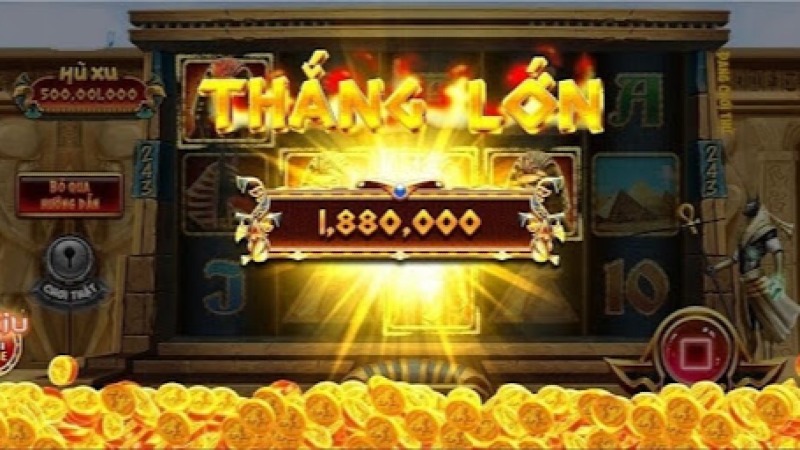
Move into the digital lobby. You will see "penny slots" heavily promoted to capture the recreational crowd. Frankly, that specific terminology is a brilliant piece of psychological marketing designed to imply negligible risk. Modern video slots abandoned single-line mechanical reels a long time ago. Baseline games today force the activation of forty to fifty paylines just to unlock bonus features. That single penny wager vanishes instantly. It morphs into a mandatory fifty-cent pull. Nudge the line multiplier up a notch. Suddenly, the machine drains several dollars per spin.
Developers mask this rapid capital decay with artificially high hit frequencies. A player might technically win on thirty percent of their spins. The catch? False wins mathematically dominate that hit rate. Picture a dollar bet across a hundred lines. The reels land a combination paying thirty cents. Immediately, the interface explodes with celebratory lights and digitized coin noises. Your brain receives a massive dopamine spike. The cold reality is that you just lost seventy cents on the transaction.
Mechanical reels with limited physical stops are relics of the past. Virtual reels governed by Random Number Generators dictate the modern action. Standard five-reel games harbor hundreds of millions of mathematical combinations. This vast programmable space allows developers to advertise massive, low-probability top payouts while padding the lower end of the paytable with those frequent, meaningless mini-hits. You bring a hundred bucks hoping to kill an hour, and that exact volatility curve becomes pure financial venom. Veterans on a budget avoid this trap entirely. You will see them camped out at flat-betting tables. Or they dig up boring, low-variance machines with a theoretical return above 96 percent. The dream of a massive jackpot goes out the window, swapped instead for a slow, highly calculated bleed.
The VIP Mirage and Volatility Chasers
Climb up the financial ladder. The architecture changes completely. High-stakes players operate in a volatile landscape engineered for massive short-term swings. The mathematical objective is ruthlessly straightforward. These bettors want to capture a rare jackpot or ride a sudden, violent table streak before the house edge grinds their hefty bankroll down to zero. Casinos know these whales are mathematically guaranteed to lose over a large enough sample size. Operators soften those inevitable blows with aggressive loyalty programs.
Perks like loss-back promotions, wire fee waivers, and elite tier matching represent more than just nice hospitality gestures. They act as calculated mathematical tools to alter the net expected value of a session. Theoretical loss serves as the core metric for any rewards program. The casino software tracks total betting volume multiplied by the house edge of the specific games favored by the VIP. Floor managers happily comp a luxury suite or hand over a thousand-dollar loss rebate. The algorithm already knows exactly how much that player is projected to drop over the next fiscal quarter.
Survival in this bracket requires ironclad math. Table maximums exist primarily to stop unlimited capital from breaking the game via negative progression systems. A guy holding fifty thousand dollars in his digital wallet cannot double down endlessly on a roulette wheel. A statistically normal streak of ten bad hands forces a brutal collision with the table limit. That ceiling shatters the progression. The player faces total session ruin.
Finding the Mathematical Middle Ground
Game selection determines how violently your bankroll fluctuates during a session. Traditional table games offer the safest harbor for both ends of the financial spectrum. European Roulette cuts the house edge in half compared to the American wheel simply by dropping the double zero from the board. Basic strategy Blackjack drops the casino's mathematical advantage to roughly half a percent. That specific game remains the holy grail for capital preservation. Look at Baccarat. You need absolutely zero strategic brainpower once the dealer takes over the shoe. High-rollers gravitate toward it for one specific reason. The variance stays insanely tight. Whales can churn through massive betting volume to rack up tier credits, and the math usually protects them from a sudden, brutal blowout.
Sports bettors have the luxury of using advanced math. Guys grinding out positive expectation situations lean on formulas like the Kelly Criterion to dial in their bet sizes perfectly. That math completely falls apart in standard casino gaming. Casino expected value is permanently negative. Kelly formulas universally output a negative number against the house edge. The mathematically optimal bet size is therefore zero. Nobody logs into an account just to stare at the lobby screen. Fractional flat betting remains the only viable defensive strategy available.
Those craving slot variance face a completely different beast. Networked jackpots siphon a significant chunk of the base RTP to fund a massive, shared top prize. This leaves the standard, everyday spins feeling incredibly tight. Bettors aiming for life-changing money can explore various progressive options at major regulated operators. You just have to accept the brutal volatility index attached to them. Small bankrolls often evaporate entirely before the bonus wheel even triggers. The math demands that bet sizing aligns strictly with the game's volatility profile, rarely exceeding one or two percent of total session liquidity.
Your Brain is the Actual Casino
The hardest variable to control is not the software. It is the human ego. The Gambler's Fallacy destroys more bankrolls than standard deviation ever could. Human beings absolutely hate true randomness. We want patterns. We demand orders. Watch a roulette wheel drop the ball into a black pocket five consecutive times. Novices immediately assume red is somehow "due" to balance the universe. The physical wheel has no memory whatsoever. The odds of red on the sixth spin remain exactly the same as the very first. Casinos deliberately exploit this by plastering digital trend boards across the screen, baiting you into chasing ghosts.
Then comes the mental accounting trap. Players who go up early in a session start treating their profits as "house money." They suddenly make reckless, aggressive bets they would never attempt with their initial deposit. Look closer and you realize that money is legally yours the exact second it hits your digital balance.
Emotional regulation separates the professionals from the donors. A bad beat is just mathematical variance playing out on schedule. Failure to detach human ego from the momentary swings of a random number generator guarantees destruction. No amount of VIP tier matching or perfectly calculated bet sizing will save an emotionally compromised account. The real game is played in the mirror, and the house is always betting you will blink first.