

How to Read Football League Tables Correctly: Points, Goal Difference and Head-to-Head Records
Why does one team rank above another when both have the same number of points? It sounds like a simple question, but even long-time football fans can sometimes find the answer confusing. A league table contains much more information than just the points column. Understanding the other figures can help fans follow the title race and relegation battle more accurately.
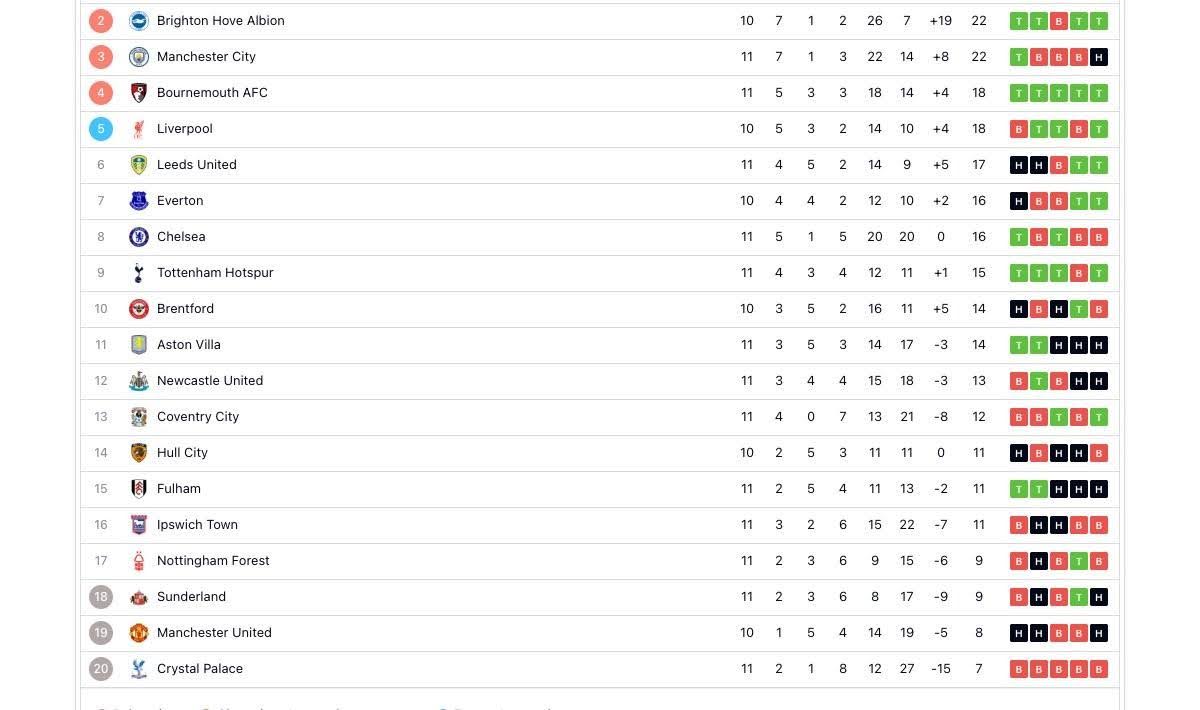
This article explains what each column in a football league table means, with numerical examples, for readers who regularly check standings on websites such as KQBD after each round of matches.
What Do the Columns in a League Table Mean?
A standard football league table usually contains the following columns, although abbreviations may vary slightly from one website to another.
-
Matches played: The total number of matches a team has played. This is important because teams do not always play the same number of games.
-
Wins, draws and losses: The three basic performance statistics.
-
Goals scored and goals conceded: The total number of goals a team has scored and the number it has allowed opponents to score.
-
Goal difference: Goals scored minus goals conceded.
-
Points: A win earns 3 points, a draw earns 1 point and a loss earns 0 points.
How Points and Goal Difference Are Calculated: An Example
Suppose Team A and Team B have the following records after 10 rounds:
| Team | Played | Won | Drawn | Lost | Goals For | Goals Against | Goal Difference | Points |
|---|---|---|---|---|---|---|---|---|
| Team A | 10 | 6 | 2 | 2 | 18 | 9 | +9 | 20 |
| Team B | 10 | 5 | 5 | 0 | 14 | 8 | +6 | 20 |
Team A has won 6 matches and drawn 2, giving it 20 points: 6 × 3 + 2 × 1 = 20.
Team B remains unbeaten, with 5 wins and 5 draws, also earning 20 points: 5 × 3 + 5 × 1 = 20.
The two teams have the same number of points, even though they have taken very different routes to get there.
When it comes to goal difference, Team A has scored 18 goals and conceded 9, giving it a goal difference of +9. Team B has scored 14 and conceded 8, giving it a goal difference of +6. If the competition uses goal difference as the first tie-breaker, Team A will rank higher.
This example also highlights an interesting point: remaining unbeaten does not necessarily mean finishing at the top. One win is worth as many points as three draws, so a team that takes more risks to secure victories may sometimes have an advantage over one that draws frequently.
Goal Difference or Head-to-Head Records: Different Leagues, Different Rules
When two teams finish level on points, competitions do not all follow the same tie-breaking rules. There are two common approaches.
Goal Difference Comes First
Under this system, results from the entire season are taken into account. The team with the better goal difference ranks higher. If the teams are still level, the total number of goals scored is usually considered next.
This approach encourages teams to keep scoring, even when a match is already effectively decided.
Head-to-Head Records Come First
Under this approach, the results of matches played between the teams involved in the tie are considered first.
Using the earlier example, if Team B had beaten Team A in their head-to-head meeting, Team B could rank higher despite having an inferior overall goal difference.
Because tie-breaking rules vary between competitions and may change from season to season, fans should check the regulations of the specific league they follow rather than assume that every competition uses the same system.
Details That Are Easy to Overlook When Reading a League Table
A league table is only a snapshot of the standings at a particular moment. Without the right context, that snapshot can sometimes be misleading.
-
Postponed or rescheduled matches: A team that has played one fewer match may be lower in the table than its actual position suggests. When teams have played different numbers of games, comparing points per match can provide a clearer picture.
-
Update times: Standings on eKQBD are updated after each round, so rankings during an ongoing round may not yet reflect the results of recently completed matches.
-
Remaining fixtures: Two teams may have the same number of points, but their prospects could be very different if one still has to face several strong opponents.
-
Qualification and relegation positions: Places that determine qualification for continental competitions and relegation are important boundaries to watch, not just the position at the top of the table.
Combining League Standings with Other Information
A league table answers the question, "Where does a team stand right now?" To understand where that team might be heading, you need to consider additional information.
Results from recent rounds can reveal a team's current form, while the upcoming fixture list provides an idea of the challenges ahead.
On football information websites, readers can also explore betting odds covering three main markets: Asian Handicap, European 1X2 and Over/Under. Match previews based on recent form and head-to-head records may provide further context.
Sometimes, the odds suggest that the market considers a team in eighth place stronger than a team sitting in fifth. This is a reminder that league position alone does not tell the whole story about a team's actual strength.
However, odds and predictions represent probabilities, not guaranteed outcomes. This content is intended for adults aged 18 and over. Anyone who chooses to participate in betting should set personal limits, gamble responsibly and never treat any prediction as a guarantee.
Where Can You Check Football League Tables Easily?
Fans following competitions such as the English Premier League, La Liga, Serie A, the UEFA Champions League and Vietnam's V.League can find standings and match results for each round on ekqbd.com, where information is organised by competition.
The next time you see two teams level on points, you will know what to check: the number of matches played, goal difference and then head-to-head records, according to the competition's regulations.
Following these three steps will help you understand why the league table is arranged the way it is.
