

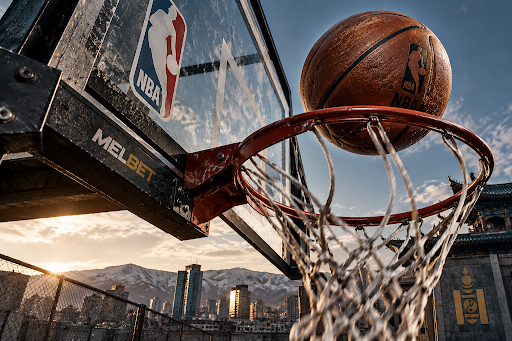
In Ulaanbaatar, people may not know who the IOC President is, but even children know who LeBron James is. NBA jerseys, basketball shoes and highlights of stars such as Jayson Tatum, Stephen Curry and LeBron James have become increasingly familiar elements of youth basketball culture. As well as providing spectacular entertainment, the NBA offers Mongolian youngsters a way to integrate into the global community without having to leave their home country.
It’s fascinating to observe this process from the sidelines. Just twenty years ago, conversations about basketball in Ulaanbaatar were limited to the local league and the occasional broadcast picked up via satellite. Today, all you need to do is open an app, place a bet on the match outcome – and you’re already in the game. So NBA betting has become a distinct way of engaging the audience, forming part of the fandom. Through predictions, fans experience a wider range of emotions. They analyse, take risks, place bets and even monetise their knowledge of the teams in the world’s largest National Basketball Association. But how did the NBA manage to put down such deep roots in this steppe region? We’ll tell you right now.
From satellite dishes to streaming on smartphones
Accessibility has changed everything. In the past, NBA matches in Mongolia were shown with a delay. The picture quality usually left a lot to be desired. Today, fans in Mongolia can watch NBA games live through services such as NBA League Pass, while YouTube and social media provide highlights, interviews and shorter forms of league content. Internet speeds in Ulaanbaatar have increased, whilst smartphones have become more affordable. The barrier to entry has come crashing down.
The younger audience took to this leap instantly. According to analytics platforms, local users are increasingly searching for basketball content in English. They watch podcasts, match analyses and highlights with no less enthusiasm than they do full matches. Furthermore, the language barrier is no longer an issue. After all, there are subtitles, automatic AI translation and familiarity with sporting terminology.
Here’s what has changed the landscape most for Mongolian fans:
-
live NBA broadcasts — available on several platforms without complicated registration;
-
social media — TikTok and Instagram have become the main sources of short videos and news, fuelling interest in the league;
-
mobile apps — thanks to entertainment industry leaders such as Melbet Mongolia, statistics, notifications, betting and analysis are all gathered in one place.
Another reason for the popularity of American basketball in Ulaanbaatar lies in a simple stroke of geographical luck. The time difference between the US East Coast and Mongolia is 13 hours, which gives local fans a unique advantage. When an evening match kicks off in New York or Boston, a student in Ulaanbaatar is just switching on their smartphone on their way to their first lecture.
The groundwork for basketball had been laid
The NBA did not enter a blank market. Battsengel Gotov, head of the Mongolian Basketball Association, explicitly described ‘basketball’ as the number one sport in the country. Sanchir Tungalag told FIBA that almost every housing estate has a basketball court, and in the summer teenagers spend days on end playing on them. Even the ubiquitous football has slipped into second place.
The scale of the youth base is clearly evident through 3×3. According to FIBA, around 10,000 children take part in basketball-related events every year. For example, in 2025, the World Championship in Ulaanbaatar attracted over 50,000 spectators over the course of a week, with the Mongolian women’s national team reaching the final. When a child sees serious basketball taking place in their own city, a Warriors match broadcast late at night no longer feels like something from another planet.
Three factors draw young spectators to the NBA:
-
the chance to play the game themselves, rather than just watching it from afar;
-
an appreciation for the value of long-range shots, substitutions and quick decision-making;
-
the chance to discuss their favourite players with their peers.
It turns out that for a young fan in Ulaanbaatar, basketball doesn’t often begin with an American arena. First, there’s the hoop in the courtyard, the school hall, a 3×3 tournament in Sukhbaatar Square or a match by a local club. Then Branson, Durant, Edwards and the rest of the 82-match line-up arrive on their phones. In such an environment, there’s no need to explain the rules of the NBA from scratch. A love for the game develops naturally.
LeBron, Curry and other heroes of Mongolian youth
Icons shape their audience. Stephen Curry remains the most frequently mentioned basketball player amongst Mongolian teenagers. His playing style – fast, precise, fierce – is ideal for short videos and repeated viewings. LeBron James is associated with longevity and leadership. Meanwhile, Luka Dončić and Nikola Jokić are associated with the European school of play, which resonates with Mongolian viewers.
The local media have picked up on this interest. Sports publications are publishing translations of NBA news, whilst bloggers are analysing matches in Mongolian. Fan clubs have sprung up on social media, where people discuss the draft, trades and predictions for the play-offs. A new generation of fans identify with specific players. This, incidentally, creates an emotional attachment that keeps their attention for years.
The ‘Mike’ Factor and the National Trigger
The clearest current link between Mongolia and the NBA system is Enkhiin-Od Sharavjamts, better known in the United States as ‘Mongolian Mike’. The son of legendary centre Sharavjamts Tserenjanhar has navigated a rocky path through the NCAA and secured his place in the Orlando Magic system by signing a deal with their affiliate club, the Osceola Magic. For Mongolia, his breakthrough is comparable to a flight into space.
To sum up, the country has its own players, international tournaments, packed courts and children with a ball. The American league adds to this environment a massive spectacle complete with statistics and an endless supply of highlight reels. If a schoolboy argues about Stephen’s shot in the morning and practises his form in the playground in the evening, the distance between Ulaanbaatar and San Francisco begins to be measured in field goal percentages.
