

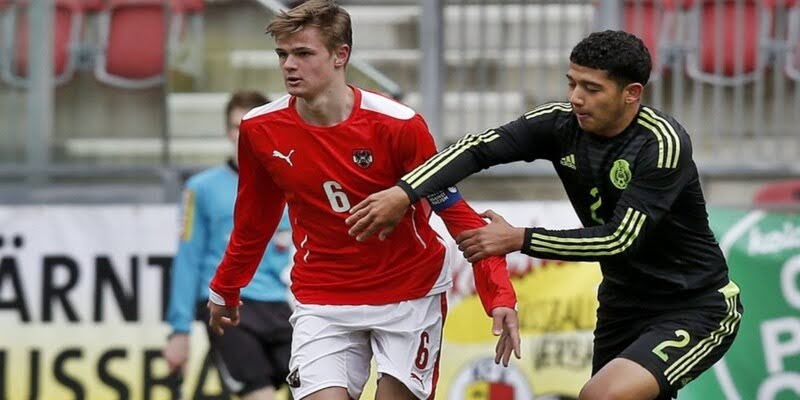
Lukas Fahrenberger is a notable case of someone who entered the German training environment but ended his career relatively early. Born in 2001 in Vienna, he grew up in the youth system of Rapid Wien before moving to Eintracht Frankfurt in 2019 see more at WINLAH Right now!
Background information and profile of player Lukas Fahrnberger
Born on January 8, 2001 in Vienna,player Lukas FahrenbergerHe holds Austrian citizenship and received football training from a young age. He joined Rapid Wien in 2007, staying with them until 2019 before moving to Eintracht Frankfurt's youth academy.
Fahrnberger primarily plays as a defensive midfielder, but can also play as a central midfielder or left-back when the team needs to adapt. His professional data also indicates he is left-footed, approximately 1.82 meters tall, and has previously represented the Austrian youth national team.
The training and career development journey of player Lukas Fahrnberger
Lukas Fahrnberger's success came about through two training environments with relatively different tactical requirements and personnel competition. Rapid Wien laid the foundation for over a decade, while Eintracht Frankfurt presented a new challenge in German youth football.
How the training platform at Rapid Wien shaped Fahrnberger.
-
He started playing for Rapid Wien in 2007, when he was just entering the youth football program.
-
The period extending to 2019 allowed him to develop his technical skills before seeking a challenge outside of Austrian football.
-
Being positioned in midfield suggests he is well-suited to tasks involving positional control, defensive support, and ball distribution.
-
The ability to play as a left-back provides significant tactical options, especially since youth teams often require players to adapt to multiple roles.
-
His youth team records confirm that he once represented the Austrian U17 team, reflecting that he was once among the national team's promising talents.
-
Two appearances for the Austrian U17 team don't guarantee a professional career, but they still prove Fahrnberger has overcome a competitive selection process.
Moving to Frankfurt presents a greater competitive challenge.
-
In 2019,player Lukas FahrenbergerLeaving the Rapid Wien system to join Eintracht Frankfurt marked a significant change in his training process.
-
Moving to Germany meant Fahrenberger had to adapt to a new environment, where the pace of work and the level of competition for positions were both high.
-
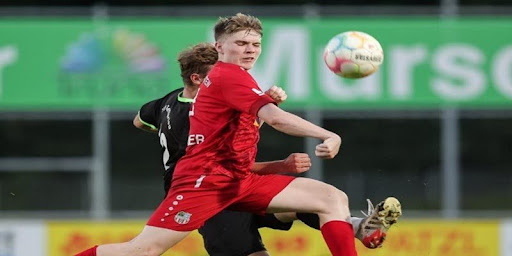
Between the 2019 and 2020 seasons, data shows Fahrnberger participated in 12 matches in the youth league for the under-19 age group.
-
He started three matches and accumulated 378 minutes, equivalent to about four full matches if converted to standard playing time.
-
He didn't score in the minutes recorded, which is consistent with his role being more defensive than focused on penetrating the penalty area.
-
Those numbers reflect the real opportunities to play, but they don't yet show that he has become a regular key player for the youth team.
The short timeframe limits professional progress.
-
He was listed in the Eintracht Frankfurt team records for the 2020-2021 season, but his playing impact remained limited.
-
Public data doesn't show a long enough run of top-level matches for him to establish a stable position in a professional team.
-
Career records identify Eintracht Frankfurt as the last club before Fahrenberger ceased playing in July 2021.
-
At that time, he was only 20 years old, an age when many players of his generation were still looking for loan opportunities.
-
The early termination of his contract means that the evaluation process will have to rely more heavily on his youth training, position, and the matches he has already played.
-
This case demonstrates that academy achievements and youth experience alone are not enough to guarantee a player will progress to top-level football.
Lukas Fahrnberger's professional characteristics and assessment perspective.
Based on the position records,Lukas Fahrenberger belongs to the defensive-minded midfield group, rather than the type of player focused on scoring goals. His left foot and ability to cover three areas give him a relatively good foundation for adapting to systems that require personnel rotation.
The defensive midfielder role suits his professional profile.
-
Main location of Lukas Fahrenberger is identified as a defensive midfielder, a position requiring positional discipline and the ability to support the back line.
-
The records also list central midfielder as an additional option, suggesting Fahrenberger is likely to be used in the midfield area.
-
A left-footed midfielder often provides additional options for ball distribution when the team needs to change its approach.
-
Fahrenberger's ability to play left-back increases his range of uses, especially in youth teams that frequently experiment with tactical structures.
-
However, the available data is insufficient to prove that he possesses the long-passing, tackling, or ball-winning abilities at a professional level.
-
Therefore, accurate assessments should be limited to positional record and playing experience, rather than inferring qualities that have not been statistically documented.
Conclude
He had a prestigious training background at Rapid Wien and Eintracht Frankfurt before the age of 20. He primarily played as a defensive midfielder, was left-footed, represented Austria's U17 team, and was capable of playing two additional positions. He didn't build a long professional career, but his case helps readers understand the process of selecting young players at WINLAH app